How to Lower Your Car So You Can Look Cool & Drift Better
Low cars and drifting are synonymous. You’re not going 4-wheel driving so get your car as low as it can go.
Not only does lowering your car make it look cooler, it improves its performance for drifting and driving fast around corners.
A lowered car has a lower center of gravity, making it more stable and easier to handle when drifting around corners.

Why Lower Your Car for Drifting
Lowering your car for drifting is an essential modification. It improves your car’s performance on the drift track, and makes your car look bad ass.
When you lower your car, you decrease its center of gravity, which improves handling and stability during high-speed drifting.

Lowering your car also reduces body roll, which is the side-to-side movement of your car’s body during turns and when drifting. When your car experiences body roll, it can adversely affect your control and stability, making it harder to maintain drifting on the proper line and stay on the track. By lowering your car, you can reduce body roll and improve your control, making it easier to drift through corners and maintain your speed.
Lowering your car can also improve traction in the front and rear tires, which is crucial for drifting. When your car is lowered, it transfers weight to the tires, increasing their grip on the road. You want traction in both front and rear for obvious reasons. In the front, you need to be able to steer the car so you don’t prang into the other cars or the wall, and in the rear so you get speed and not too much wheelspin which is not fun.
However, it’s important to note that lowering your car too much can have negative effects on drifting performance. If your car is too low, it can scrape the ground and damage your undercarriage, which can lead to costly repairs.
The other downside is that it can mess up the suspension and steering geometry if your car is too low. It can cause bump steer which can be dangerous as your front wheels will steer in unwanted directions when going over bumps. At high speeds, this is less than ideal as it can make you lose traction and at best, put you off the drifting line.
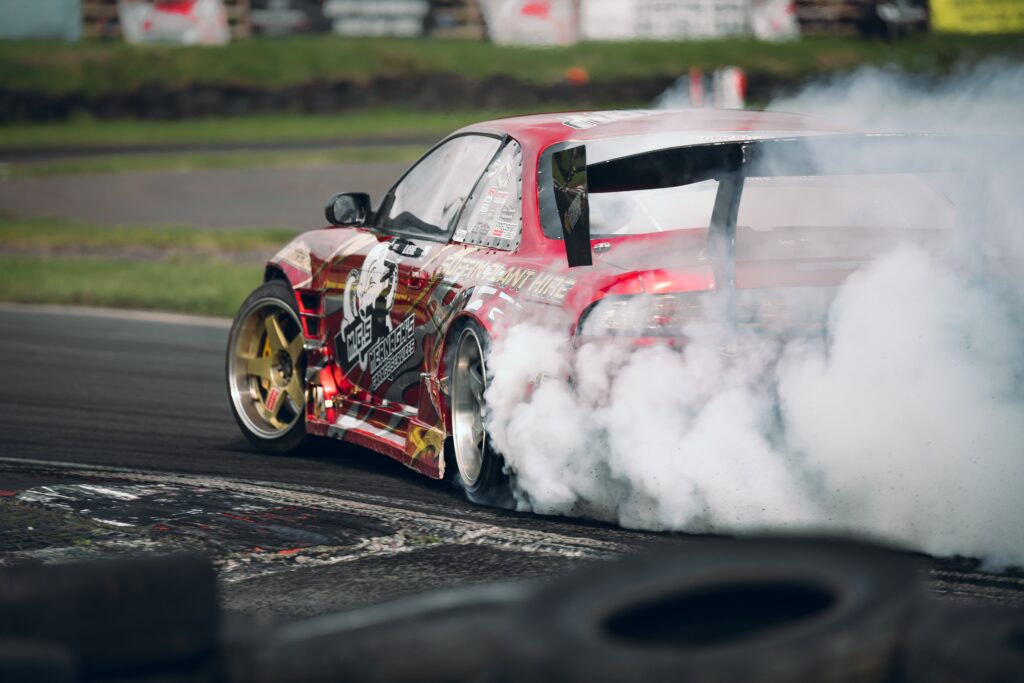
Lowering too much can also make your car less comfortable to drive on bumpy or uneven roads but you probably don’t care about that.
In summary, lowering your car for drifting can improve your performance on the track by reducing body roll, improving traction, and increasing stability.
However, it’s important to find the right balance between lowering your car and maintaining its functionality.
Choosing the Right Lowering Kit
You could get out the wheel of death and chop the springs. But you actually want to keep your fingers and want your suspension to work while still low to the ground, so put the angle grinder down.
There are two main types of lowering kits: lowering spring kits and coilover kits.
Lowering Spring Kits

Lowering spring kits are a popular choice for those on a budget. They replace the stock springs in your suspension with shorter, stiffer springs, lowering your car by one to three inches. Spring kits are relatively easy to install and are available for most makes and models. They are also a lot less expensive than coilover kits.
When choosing a spring kit, it is important to consider the spring rate. A higher spring rate will provide a stiffer ride, which is ideal for drifting. However, a stiffer spring rate may also result in a harsher ride on rough roads.
Coilover Kits
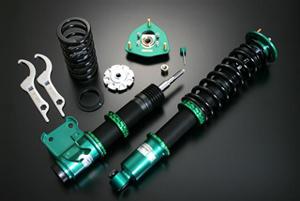
Coilover kits offer more adjustability than spring kits. They allow you to adjust the height of your car as well as the stiffness of the springs and shocks. Coilover kits are typically more expensive than spring kits but offer better performance and handling.
When choosing a coilover kit, it is important to consider the quality of the components. Look for kits made from high-quality materials that are designed to withstand the rigors of drifting. It is also important to choose a kit with adjustable dampers, which will allow you to fine-tune the suspension to your driving style.
In conclusion, lowering spring kits are a budget-friendly option but usually don’t get your car super low and not as stiff as you’d like, while coilover suspension kits offer more adjustability and better performance. Consider your driving style and the conditions you will be driving in when choosing a kit.
Adjusting Suspension for Optimal Drift
When it comes to drifting, having the proper suspension setup is crucial. Here are some tips on how to adjust your suspension for optimal drift:
Adjusting Spring Rates and Shock Dampening
One of the most important aspects of a drift car’s suspension setup is the spring rates and shock dampening. Typically, higher spring rates and stiffer shock dampening in the front are used to transfer weight to the rear tires to give you more bite while drifting. However, too hard springs in the front will produce understeer. Finding the right balance between front and rear stiffness is key to achieving the desired level of oversteer and feeling.
Experiment with different spring rates and shock dampening settings to find what works best for your driving style and the specific track conditions.
Camber and Toe Adjustments
In front and rear, camber and toe adjustments can also play a significant role in a drift car’s suspension setup.
In the front: Increasing negative camber on the front wheels can help with turn-in and provide more grip during transitions. Additionally, adjusting the front toe can help fine-tune the car’s handling characteristics when at angle.
In the rear: For maximum grip and even tire wear while drifting, 0 degrees camber is ideal for the rear tires. And you will want a little toe-in to produce forward bite. It will also give you a little more control. But be careful as too much toe in in the rear will end up being very snappy in transitions which will be hard to control.

Again, it’s important to experiment with different settings to find what works best for your car (power and tire levels) and driving style. Keep in mind that extreme camber and toe settings can also lead to uneven tire wear and reduced grip in certain situations.
Sway Bars and Other Adjustments
Sway bars can also be used to fine-tune a drift car’s suspension setup. Increasing the stiffness of the rear sway bar can help induce more oversteer, while increasing the stiffness of the front sway bar can help reduce understeer.
Other adjustments, such as ride height and alignment settings, can also play a role in a drift car’s suspension setup. However, it’s important to keep in mind that these adjustments should be made in conjunction with the other suspension settings to achieve the desired level of oversteer and control.
Overall, finding the right suspension setup for your drift car can take time and experimentation. However, by adjusting spring rates, shock dampening, camber, toe, sway bars, and other settings, you can fine-tune your car’s handling characteristics to achieve optimal drift.
Maintaining Your Lowered Car
Lowering your car for drifting can improve its handling and give it a more aggressive look. However, it also requires you to take extra care of your car’s maintenance. Here are some tips to help you keep your lowered car looking good and in one piece:
1. Watch Out for Speed Bumps and Other Obstacles
Lowering your car means that it sits closer to the ground, which can make it more challenging to navigate over speed bumps, steep driveways, and other obstacles like leaves. To avoid scraping your car’s undercarriage, you should slow down when approaching these obstacles and take them at an angle whenever possible.
2. Check Your Tires Regularly
Lowering your car can affect your tires’ wear and tear. You should check your tires’ pressure and alignment regularly to ensure that they are wearing evenly. Uneven wear can cause your tires to wear out faster and affect your car’s handling.
3. Keep Your Suspension System in Good Condition
Your car’s suspension system absorbs shocks and keeps your car stable while driving. Lowering your car can put extra stress on your suspension system, so you should regularly check to make sure that it is in good condition. Check your control arms for signs of wear and tear, such as cracks and worn bushings, and replace any damaged parts. Over time, your suspension (shock absorbers) may develop a leak too so keep an eye out for that.
Common Mistakes to Avoid
When it comes to lowering your car for drifting, there are a few common mistakes that you should avoid to ensure that your car performs at its best.
Mistake #1: Lowering Your Car Too Much
Lowering your car too much can lead to a harsher ride quality and make it more difficult to enter and exit the vehicle. It can also cause your car to scrape against the ground, which can damage the undercarriage and cause problems with your suspension. It’s important to find the right balance between lowering your car and maintaining a comfortable ride.

Mistake #2: Using Cheap Parts
While it may be tempting to save money by using cheap parts, this can actually end up costing you more in the long run. Cheap parts may not be as durable or reliable as higher quality parts, which can lead to problems down the road. It’s important to invest in quality parts that are designed for your specific make and model.
Mistake #3: Neglecting Your Suspension
Lowering your car can put extra stress on your suspension, so it’s important to make sure that it’s in good condition. Neglecting your suspension can lead to problems with your steering, handling, and overall performance. Make sure to regularly inspect your suspension and replace any worn or damaged parts.
Mistake #4: Ignoring Alignment Issues
Lowering your car can also affect your alignment, which can cause your tires to wear unevenly and affect your handling. It’s important to have your alignment checked and adjusted after lowering your car to ensure that everything is properly aligned.
By avoiding these common mistakes, you can ensure that your lowered car is ready for drifting and performs at its best. Remember to invest in quality parts, maintain your suspension, and keep an eye on your alignment to get the most out of your lowered car.

Conclusion
Lowering your car can be a great way to improve its performance for drifting and making it look cooler than Coolio. By lowering the center of gravity, you can improve stability and reduce body roll, making it easier to control your car in high-speed drifts. However, it’s important to keep in mind that lowering your car can also have some downsides.
One potential issue is that lowering your car too much can lead to bottoming out, which can damage your car’s suspension or undercarriage. Additionally, lowering your car can make it less comfortable to drive, especially on rough roads.
When deciding how much to lower your car, it’s important to consider your specific needs and preferences.
If you’ve got a track-only drift monster, then you can probably go crazy and drop the thing as you like, (as long as it still performs well).
However, if your drift car is also your daily driver, you may want to find a balance between comfort, performance and safety.
Make sure to research your options and consult with a professional if you’re not sure what’s right for you. With the right setup, you can enjoy drifting in a slammed whip while still keeping your car safe and comfortable to drive.
-Disco Stu
 Yo! I'm Disco Stu! Ebisu circuit
is my playground. Stay connected to keep up with the latest news and
info from Ebisu circuit.
Yo! I'm Disco Stu! Ebisu circuit
is my playground. Stay connected to keep up with the latest news and
info from Ebisu circuit.